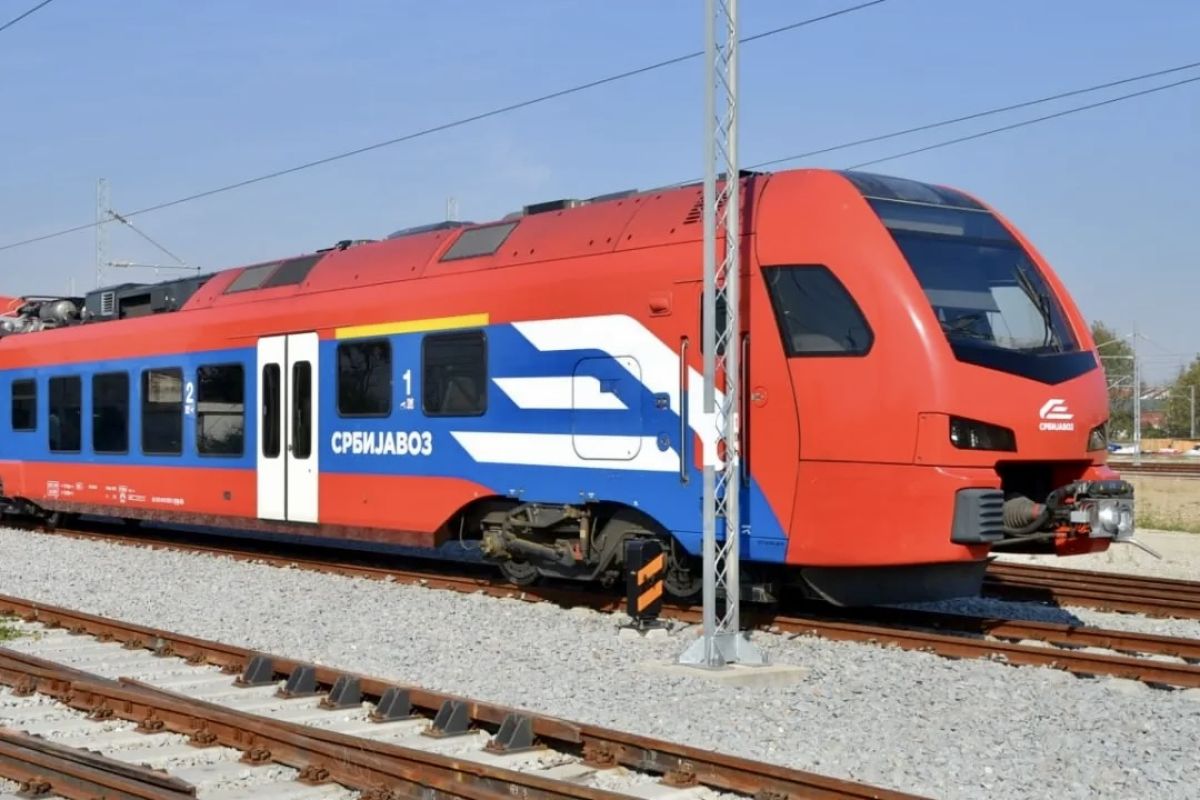
LTG Link, the passenger operator of the Lithuanian Railways Group, has presented its first new Stadler FLIRT electric train at Vilnius railway station. The event marks the beginning of Lithuania’s transition toward modern, low-emission rail transport.
The unveiling follows a 2023 contract for 15 new trains — nine electric and six battery-powered — designed to replace ageing diesel units and expand the operator’s fleet. The vehicles are being produced at Stadler Polska’s plant in Siedlce, Poland.
Lithuania’s Transport and Communications Minister, Juras Taminskas, described the new train as a symbol of progress: “With the renewal of our train fleet, we are entering a new era of rail travel — one focused on comfort, inclusivity, and sustainability.”
The trains will operate on Lithuania’s electrified network, which will cover 731 km by 2026, about 28% of the country’s total rail lines. The electric units will serve the Vilnius–Klaipėda route at speeds up to 160 km/h, while battery-powered trains will operate on Kaunas–Šiauliai and Vilnius–Varėna–Marcinkonys services.
LTG Group CEO Egidijus Lazauskas said the investment will “reduce dependence on fossil fuels and lower operating costs while making rail travel more attractive.”
According to Stadler Polska CEO Radosław Banach, the Lithuanian FLIRT trains are “tailored to local needs, ensuring comfort, accessibility, and high reliability.” Each train offers around 200 seats, step-free low-floor access, noise-reducing carpeting, and a barrier-free layout developed in consultation with disability organisations.
A bistro area will return to Lithuanian trains for the first time in years, and up to 30 bicycles can be carried depending on demand. Ergonomic seats feature power outlets, tables and individual lighting, designed for passengers who work during travel.
LTG Link CEO Kotryna Meidė noted that the new fleet will replace the oldest diesel units on the Vilnius–Turmantas route and “introduce a new standard of travel comfort and culture.”
The first train arrived in Vilnius a few weeks ago and has now been fully assembled. Static testing begins at the end of October, with trial runs for passengers planned in 2025. The new trains are expected to enter regular service in 2026.
The project complements Lithuania’s future role in the Rail Baltica corridor, enhancing north–south passenger connections and supporting the integration of Baltic States into the wider European rail network.