A quantum inertial navigation system has been tested on Britain’s national rail network for the first time, marking what project partners describe as a world-first deployment on a mainline railway. The Rail Quantum Inertial Navigation System (RQINS) was installed on a Great Northern service operated by Govia Thameslink Railway between central London and Welwyn Garden City on 3 March.
The system uses ultra-sensitive quantum sensors to measure changes in motion and rotation, enabling precise train positioning without relying on satellite signals such as GPS.
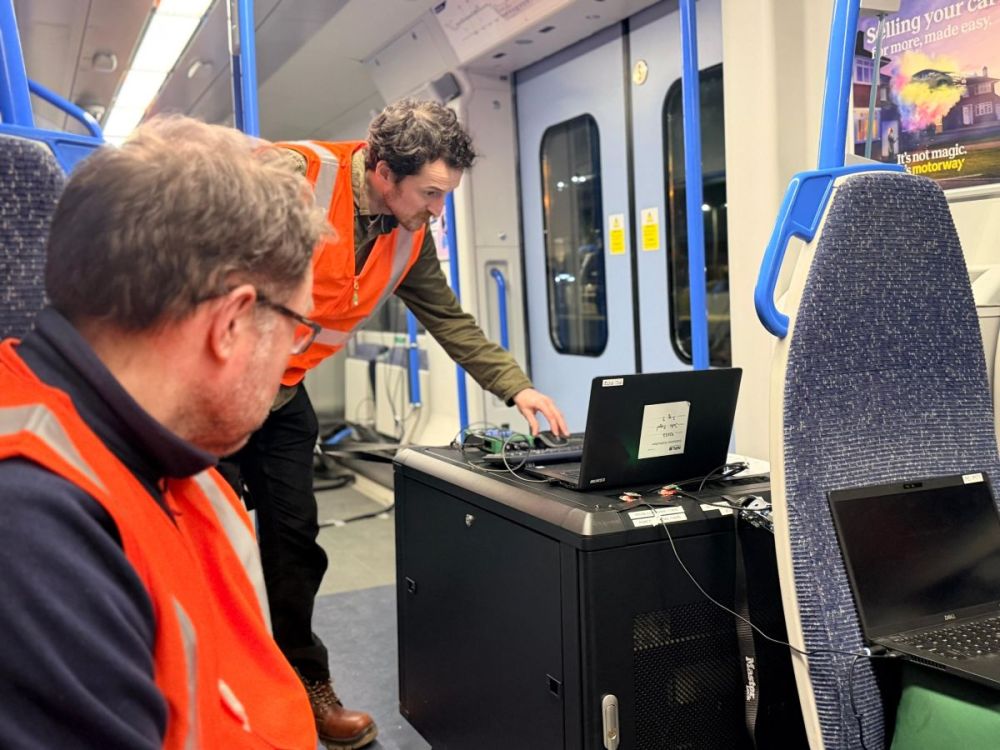
The trial is part of a programme assessing quantum sensing as a potential alternative to fixed trackside positioning infrastructure. Developers are examining whether the technology could reduce reliance on physical assets that require installation and maintenance and may be exposed to environmental or equipment-related disruption.
The initiative is convened by GBRX, the strategic innovation body for Great British Railways. The development consortium is led by MoniRail and includes Imperial College London, the University of Sussex, QinetiQ, PA Consulting and the National Physical Laboratory, with support from Innovate UK and the Department for Science, Innovation and Technology.
Previous testing of the technology has taken place within the Ministry of Defence and on Transport for London’s network. The mainline trial is intended to generate operational data to support further development for heavy rail applications.