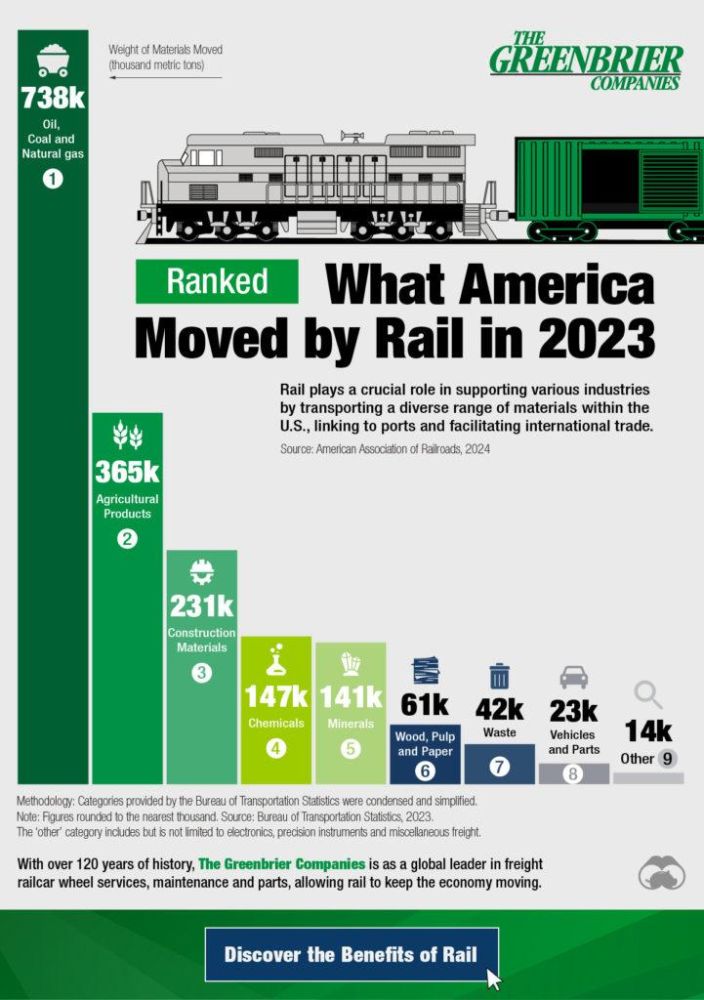
In 2023, U.S. rail freight continued to play a central role in the country’s infrastructure, moving almost 1.8 billion metric tons of various materials across its 140,000-mile (225,000 km) network. Among the broad range of goods transported, energy products such as oil, coal, and natural gas accounted for the largest portion, with 738,000 metric tons moved during the year.
Here is a breakdown of the main categories:
- Energy Products (Oil, Coal, Natural Gas): 738,000 metric tons
- Agricultural Products: 365,000 metric tons
- Construction Materials: 231,000 metric tons
- Chemicals: 147,000 metric tons
- Minerals: 141,000 metric tons
- Wood, Pulp, and Paper: 61,000 metric tons
- Waste: 42,000 metric tons
- Vehicles and Parts: 23,000 metric tons
- Other: 14,000 metric tons
Rail’s versatility remains one of its main strengths, enabling it to transport a wide variety of goods, including vehicle parts and waste products, supporting both domestic industries and international trade through key connections with ports and cities.
U.S. rail freight’s contribution to energy efficiency and emissions reduction continues to be recognized. According to data shared by Greenbrier Companies and Visual Capitalist, rail emits only 1.8% of U.S. transport-related greenhouse gases, while carrying 40% of long-distance freight. This fuel efficiency, coupled with a reduction of 709 million gallons of fuel consumption compared to the year 2000, emphasizes rail’s role in minimizing the environmental impact of freight transport.
The movement of goods by rail plays a critical part in supporting numerous industries, with safety improvements in rail operations further contributing to the sector's ongoing performance.