Thein Industry is a Czech industry group that has 3 manufacturing, 3 commercial companies and 1 service company in its portfolio. The largest is the Top Alulit aluminium foundry. It is the only one in Europe that has squeeze casting technology, which is a unique technology, when it comes to mechanical condition similar to forging technology and close to high-pressure casting, which is a mainstream trend in aluminium foundry today, and which is used a lot in the automotive industry. However, the CEO of Thein Industry sees the potential of this production in the railway industry as well.
RM: You took over Top Alulit about a year ago. How is the company today?
Michal Brijar, CEO of Thein Industry: The company today has a turnover of about €16 million and employs about 160 people. We are operating almost continuously, so we are producing almost at maximum capacity, but there is still potential in squeeze casting, which we would like to develop further. This technology is known today mainly in the Asian market, that is Taiwan, China, etc. These countries are now specialists in squeeze casting. In Europe it is a completely new technology, so we would like to develop it further. And that was one of the reasons why we went into the foundry business. The foundry business in general is a tough business, and in the context of the energy crisis it's not easy at all, because customers are gradually moving eastwards - Turkey, or just China or Taiwan, where prices are much more comfortable than in Europe. However, despite all this, aluminium still has a future in Europe. Especially strategically, because, for example, war conflicts are a big risk for you to transport something difficult from China, for example; it is more strategic to occupy locations in Europe.
And the second reason to look at aluminium is the trend of reducing the weight of products, both in automotive and in other industries. And aluminium is the transition from ferrous to non-ferrous alloys.
RM: What specifically can be made from aluminium in the transportation industry?
Michal Brijar, CEO of Thein Industry: If you look at automotive industry it might be an engine or gearbox parts, these are made today mainly by high-pressure die casting. And by using squeeze casting you might have been able produce some of them. It's this technology that allows you to make more robust castings while maintaining great mechanical properties. Primarily applicable to the energy industry, chemical plants, trucks, just industrial segments where you have larger castings and at the same time higher requirements for mechanical properties.
RM: RAILMARKET is primarily dedicated to the rail industry, so we can't help but ask, does the aluminium foundry have applications in the rail industry as well? After all, aluminium is one of the lightweight metals.
Michal Brijar, CEO of Thein Industry: Yes, we see a lot of potential for aluminium in the railway industry. We can provide castings as parts of brakes, braking systems or even as parts of chassis or bogies. Nowadays, even the railway business is thinking about how to move from that steel form into aluminium.
RM: So we can say that this company is picking up where your other company, Železniční dodavatelská, has operations. That also focuses on parts and spare parts?
Michal Brijar, CEO of Thein Industry: Železniční dodavatelská is one of the smaller companies in our portfolio, based in Nymburk and employing about 15 people. It has a turnover of around €4 million a year. Its main focus is on supplying spare parts for older Škoda and ČKD locomotives, specifically models that were manufactured around the middle of the last century. Although their operation on the Czech market is slowly declining, we still find significant applications on the markets in Slovakia, Poland, the Balkans and especially in the countries of the former Soviet Union - the so-called CIS countries. Our main clientele includes, for example, ZSSK, ČD and other carriers operating freight locomotives. This business allows us to be part of a segment that, despite its decline in some regions, still offers interesting business opportunities.
RM: What trends do you see in rail transport today and how are you responding to them within your portfolio, for example in the cooperation between Železniční dodavatelská and Lokorent Services?
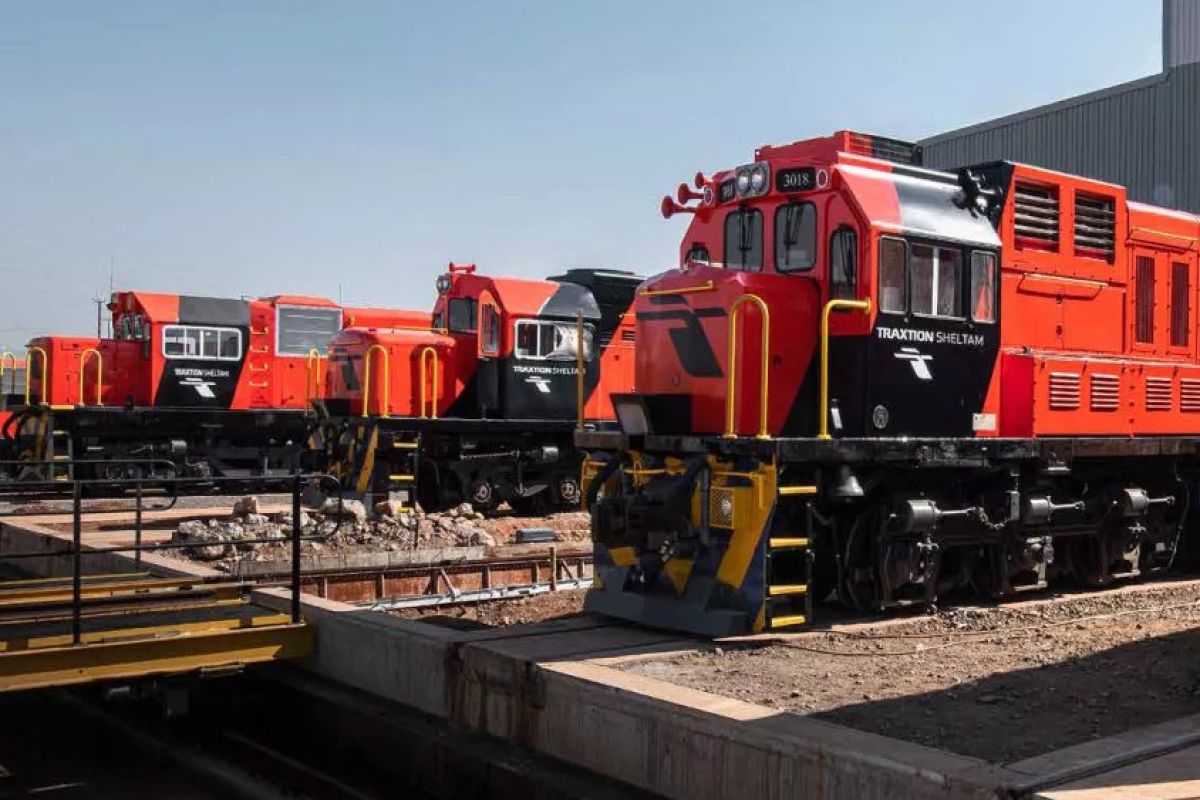
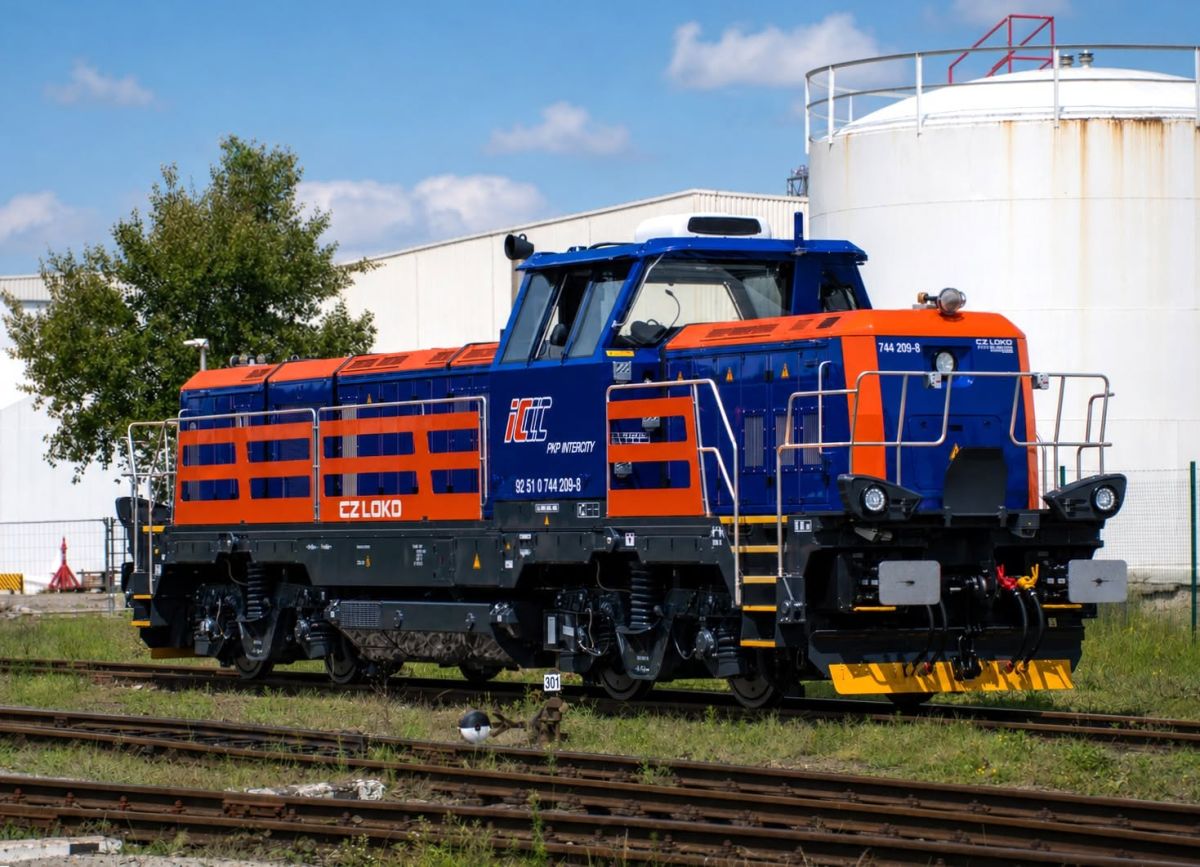
Michal Brijar, CEO of Thein Industry: Today's trends in rail transport are closely linked to the modernisation and implementation of systems such as ETCS, as well as the transition to more sustainable technologies. We are aware of these changes and are trying to respond to them by developing markets where we still see demand for electric and diesel freight locomotives, which will be needed in the future - also in the context of a green Europe that is phasing out fossil fuels. Specifically in the Polish market, our company Lokorent Services leases locomotives and currently owns about 5 locomotives, and we plan to acquire five more by the end of the year. Next year we plan to strengthen the Polish market with another 10 locomotives. We currently operate older electric locomotives of the Škoda 181 type, which are still in great demand despite their age.
To ensure the efficient operation and modernisation of these locomotives, we are working with a partner repair shop directly in Poland that specialises in refurbishment and modernisation. Železniční dodavatelská supplies this repair shop with spare parts, which enables the efficient renewal and modernisation of Lokorent's Services fleet. The locomotives are then leased to operators who use them for specific transport purposes.
RM: You've invested in hydrogen technology, and we also released a report on your plans to build hydrogen stations. What are the current developments in hydrogen and sustainability in your projects?
Michal Brijar, CEO of Thein Industry: We definitely believe in hydrogen, but at the moment we are rather waiting. We see that hydrogen technology is an important topic at European level, especially in the context of carbon footprint reduction and initiatives such as the Fit for 55 programme. Although we had greater ambitions a year or two ago, we are now seeing that national strategies are still in the development phase. Hydrogen technologies are still very costly, especially when it comes to the production of green hydrogen. When we compare the cost of running hydrogen locomotives with conventional diesel or electric locomotives, the economics do not yet make sense. That is why we are waiting for more support and subsidies from the European Union or individual countries to get this segment moving. We see that companies such as Alstom and Siemens, for example, are already working on hydrogen and some of their locomotives are in operation. However, the lack of infrastructure is another obstacle. In the Czech Republic, we currently have only two refuelling stations - in Barrandov and Vítkovice. So everything is still at the beginning and we are waiting for a clear impetus and support to enable the development of these technologies and the companies involved in them.
RM: You have started a pilot project in the field of hydrogen supply in cooperation with other partners. Can you tell us more about this project and what stage it is at now?
Michal Brijar, CEO of Thein Industry: Yes, we have been working on a pilot project in collaboration with a delivery company and a subsidiary of Renault, Hyvia, which is focused on hydrogen delivery. Our aim was to launch a project that would involve the operation of one to several hydrogen vans on the route between Dresden and Prague. Unfortunately, this project was not realised. The main problems were, on the one hand, the homologation of these hydrogen vans, which slowed down the whole process, and, on the other, the economics. The costs of implementation and operation proved too high to make the project sustainable. Nevertheless, we maintain a portfolio of companies that can turnkey the entire hydrogen propulsion concept, including financing. However, these projects are waiting for clearly defined customer requirements and demand, backed by the necessary financial and legislative support.
RM: How do you plan to collaborate with other players in the rail industry in Industry and how has your acquisition of the Top Alulit foundry affected this collaboration?
Michal Brijar, CEO of Thein Industry: Our acquisitions always aim to create synergies. In the beginning, we focused on smaller companies, such as welding companies, that are focused on similar industries - the rail and energy sectors. With the addition of Top Alulit Foundry, we have expanded our portfolio to include casting production capabilities, which allows us to offer a more comprehensive service to our customers. Through these acquisitions, we are able to connect companies within our ecosystem and share technology and customer portfolio. For example, our welding facilities supply components to Germany and Switzerland, and if there is demand for castings or larger assemblies there, we are able to offer solutions from our foundry through synergies. This approach allows us to respond efficiently to market demand while building more added value into our products. In addition, we are planning further acquisitions to expand our offering with larger welding facilities and production capacity. We are currently in negotiations with two Czech companies that could be added to our portfolio early next year. These companies would enable us to process larger structural units, such as pressure vessels or weldments in excess of 20 tonnes.
RM: And how do you see the future of Thein Industry in the context of the European industrial sector? Which markets and segments do you see as the most promising?
Michal Brijar, CEO of Thein Industry: In the future we want to continue to develop in three key areas in particular. The first is the rail sector, as we believe that with the ongoing drive for a sustainable Europe, more traffic will shift to rail, which is more environmentally friendly than road transport. The second area is energy. With the gradual closure of thermal power stations and the growing importance of renewable sources such as wind power and photovoltaics, we see great potential in the energy sector. I also think that nuclear will play an important role again, despite the current trend in some countries such as Germany. The third sector we are interested in is the defence industry and possibly the aerospace industry. It is not the main pillar of our business, but it could be a complement to our portfolio. We would focus on getting into the supply chain for defence and support technologies. We see this segment, given the geo-political situation, as growing and promising in the long term.