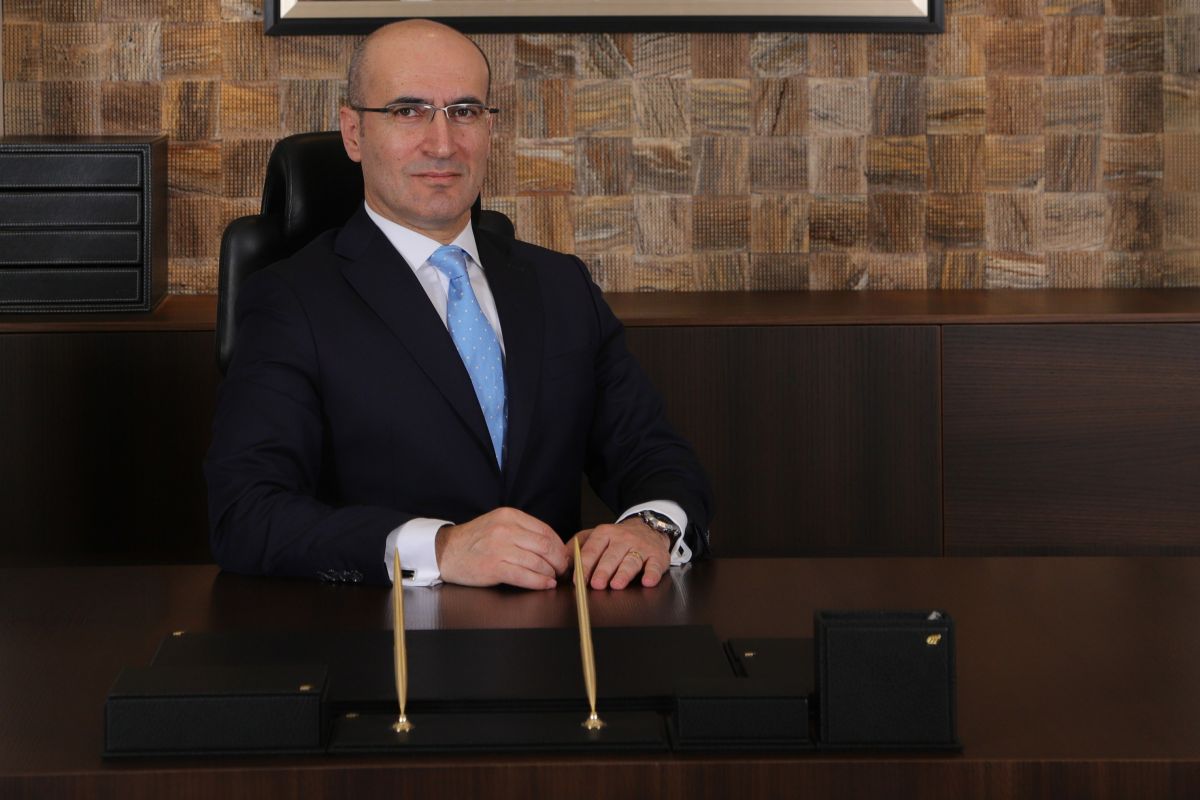
Ankara-based Winton Industries has spent 19 years building a reputation as one of Türkiye’s leading manufacturers of LPG/LNG road tankers and storage vessels, with more than 4,650 transport and storage tanks delivered and exports to over 50 countries. In June 2026 the company crossed a decisive threshold: TSI authorisation for its Uacns 82 m³ tank wagon in both aluminium and carbon steel variants — its formal entry into the European rail tank wagon market. We spoke with CEO Atilla Alakuş about why Winton is entering a market that incumbents describe as both strained and ageing, how aluminium lightweighting reshapes payload economics, and the role of green manufacturing in winning over Europe’s wagon keepers and lessors.
RAILMARKET.com: Winton secured TSI authorisation for its Uacns 82 m³ tank wagon — in both aluminium and carbon steel — in June 2026. Why is this milestone so significant, and why enter the European market now?
Atilla Alakuş: This authorisation is the culmination of years of disciplined engineering. Obtaining TSI conformity for both an aluminium and a carbon steel variant of the same wagon is unusual for a new entrant, and it signals that we did not take shortcuts. We are entering now because the timing is structural, not opportunistic. The International Union of Wagon Keepers represents more than 250 keepers with 248,000 freight wagons, performing more than 50% of Europe’s rail freight tonne-kilometres — and that fleet is ageing against an asset lifecycle UIP itself puts at 25 to 35 years, with a large share built in the 1990s and 2000s now approaching replacement. At the same time, SCI Verkehr records that the European OEM freight wagon market reached a record €1.9 billion in 2023. A credible, certified new supplier with genuine tank expertise is exactly what this market needs.
RAILMARKET.com: Incumbent manufacturers and keepers describe supply bottlenecks and long lead times. What is your reading of the current European tank wagon market?
Atilla Alakuş: The market is paradoxical. In its “Freight Wagons – Global Market Trends 2024” study, SCI Verkehr forecasts that the European OEM market will be the only region in the world to decline in the coming years — after reaching that €1.9 billion record in 2023, it is “now struggling with the effects of a weakened economy,” driven by a collapse in intermodal demand. Yet tank and gas wagons tell a different story — replacement demand is robust and capacity for specialist pressure tanks is tight. Production slots at established builders have been largely committed, and complex RID Class 2 gas wagons require welding and testing competencies that few can scale quickly. On UIP’s own fleet data, tank wagons (UIC class Z) represent roughly a third of the European keeper fleet, and RID Class 2 gas wagons a steady 8% of it. When a keeper needs LPG or ammonia wagons, they cannot simply pull capacity from a generic wagon line. That structural scarcity of qualified tank-building capacity is precisely where we position ourselves.
RAILMARKET.com: How significant is the fleet renewal challenge, and what does it mean for demand?
Atilla Alakuş: It is the defining issue of this decade. With UIP’s 25-to-35-year lifecycle, a very large cohort of European tank wagons is now in its replacement window. Renewal is not just about age — it is about compliance. Older wagons must meet the 2023 TSI revisions, RID rules for dangerous goods, and TSI Noise limits — and at some point retrofitting an old wagon costs more than buying a modern, lighter, telematics-ready one. Add the EU’s modal-shift ambition — the Sustainable and Smart Mobility Strategy of December 2020 calls for rail freight to increase by 50% by 2030 and to double by 2050 — and the long-term demand signal is clear, even if cyclical headwinds exist today. The reality check is that rail’s modal share has been moving the wrong way: Eurostat shows it fell to 16.9% of EU inland freight tonne-kilometres in 2023, down from 18.9% in 2018. Closing that gap will require a renewed, modern fleet. We are building for that renewal wave, not the spot market.
RAILMARKET.com: You offer tank wagons in aluminium as well as carbon steel. Walk us through the payload economics of aluminium.
Atilla Alakuş: Aluminium has roughly one-third the density of steel, and that weight saving converts directly into payload. Every tonne shaved from tare weight is a tonne of additional product a customer can carry within the same axle-load limits — which improves revenue per trip and lowers cost and emissions per tonne-kilometre. For light, low-density refined products and gases, this is decisive over a 30-year service life. Aluminium also resists corrosion, reducing internal coating and maintenance demands, and it is almost infinitely recyclable, which matters increasingly to buyers’ sustainability accounting. We are not abandoning carbon steel — it remains the right answer for many applications, which is why we certified both — but we believe aluminium’s payload and lifecycle case is underexploited in European rail tank wagons.
RAILMARKET.com: Winton’s heritage is in aluminium road tankers. Why does that expertise transfer to rail?
Atilla Alakuş: Aluminium tank manufacturing is a specialist discipline — the metallurgy, the welding procedures, the inspection regimes are all different from carbon steel, and they are difficult to master. We have spent nearly two decades perfecting aluminium tank fabrication for the most demanding road-transport customers, including approved-supplier status in Türkiye for BP, Shell and TotalEnergies. That means we already hold aluminium welding qualifications, an accredited on-site testing and inspection centre, and the process discipline that pressure-vessel work demands. Rail imposes additional requirements — fatigue under buffing and draft forces, TSI conformity, RID certification — but the core competence of building a safe, light, durable aluminium tank is exactly what we do. We are transferring proven expertise into a new application, not learning a craft from scratch.
RAILMARKET.com: Energy-transition cargoes are reshaping demand. How do LPG, ammonia and CO2 figure in your strategy?
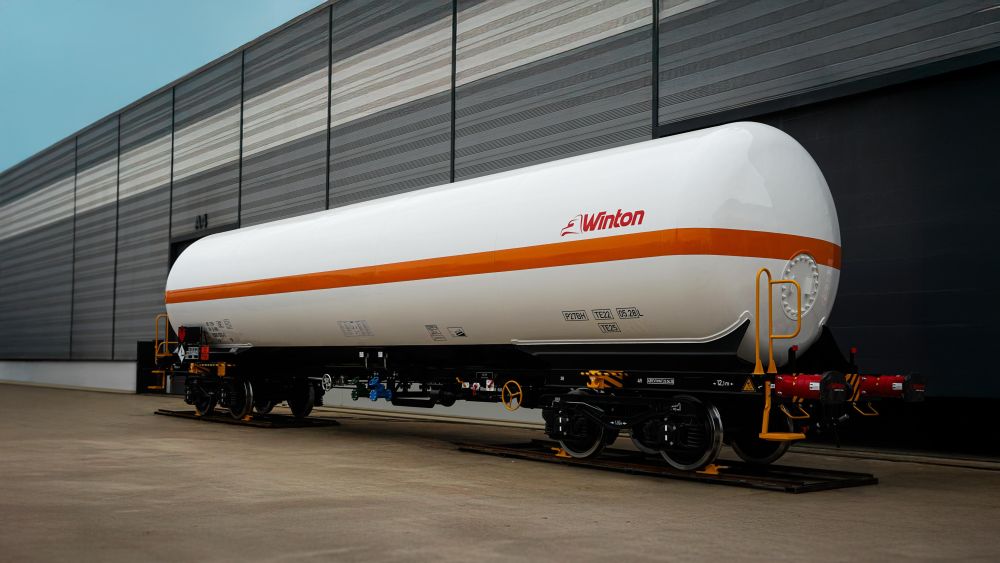
Atilla Alakuş: LPG is the established market today, and it is our foundation — our Zags 117 m³ LPG tank wagon has completed RID certification. But the more interesting story is what comes next. Ammonia is emerging as a hydrogen carrier; RWE and VTG, for example, are developing a rail distribution network for ammonia imports through RWE’s Brunsbüttel terminal, leveraging VTG’s existing ammonia-capable wagons. CO2 transport for carbon capture and storage is becoming a genuine new segment — dedicated CO2 wagons have been introduced to the market, and industry voices warn that demand for liquid-CO2 rail cars could quickly outstrip supply given the roughly two-year lead time to design, approve and build new types. These are pressure-tank applications where our gas-handling expertise applies directly. We intend to be a serious participant as these flows scale.
RAILMARKET.com: Digital Automatic Coupling is one of the biggest changes coming to European rail freight. Is Winton DAC-ready?
Atilla Alakuş: DAC is transformative and unavoidable. The European DAC Delivery Programme envisages migrating roughly 450,000–500,000 freight wagons and around 17,000 locomotives, with the EDDP estimating total migration investment at around €13 billion and a target of equipping the relevant fleet by 2030. For a manufacturer, the implication is that any wagon built today must be designed for DAC migration — adequate installation space, the right draft-gear interface, and provision for the train-wide power and data line. We are designing our new wagons with DAC readiness in mind so customers are not buying a stranded asset. The same logic applies to telematics: under the new Telematics Applications TSI — adopted by the European Commission in February 2026 — and keeper expectations, digital monitoring is becoming standard, and our wagons are built to accommodate it.
RAILMARKET.com: As a new entrant, how do you overcome the credibility gap on quality, welding and certification?
Atilla Alakuş: Credibility in this industry is earned through accreditation and traceability, not marketing. We hold EN 15085 railway welding certification, EN ISO 3834 welding quality requirements, dedicated aluminium welding qualification, and ISO 9001, 14001 and 45001. We operate what we believe is Türkiye’s longest lap-joint welding robot line, running German welding software, and we run full ERP-managed production from raw material to finished wagon, so every weld and component is traceable. Our own accredited tank testing and inspection centre is on site. And our road-tanker track record with BP, Shell and TotalEnergies demonstrates that we already meet the quality bar of the world’s most demanding energy companies. TSI authorisation is the independent validation that ties this together. We do not ask the market to take our word — we point to the certificates.
RAILMARKET.com: You are a member of VPI and have a Europe-wide partnership with Legras-Benalu. How do these shape your European footprint?
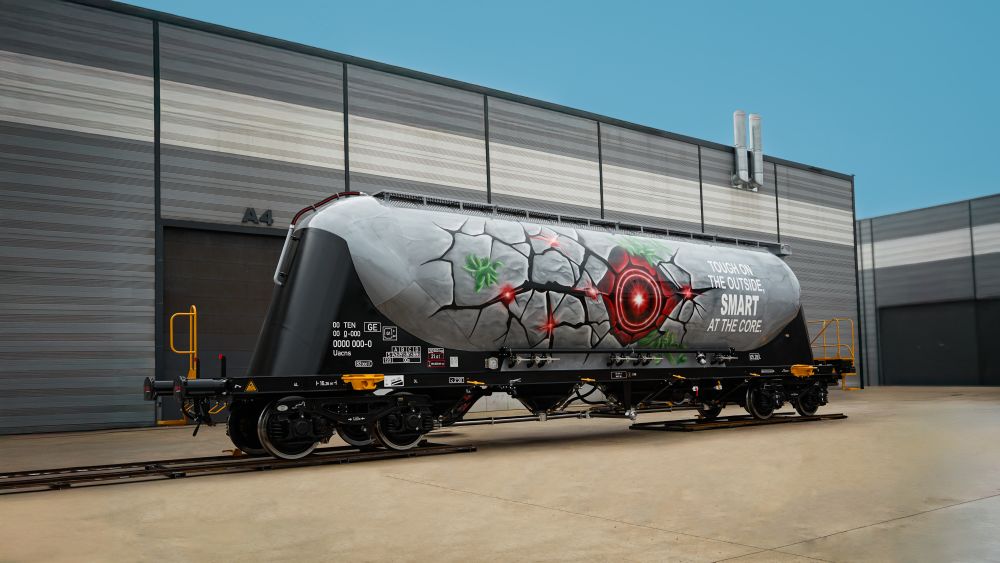
Atilla Alakuş: Both are deliberate. Membership of VPI — the German wagon keepers’ association — embeds us in the technical and maintenance ecosystem that governs how wagons are kept and serviced across Europe, including the VPI maintenance guidelines (VPI-EMG) that Entities in Charge of Maintenance rely on. It signals that we intend to be a long-term, accountable participant, not a transactional exporter. Our partnership with Legras-Benalu — part of a group that is a European leader in industrial trailers and bulk-transport vehicles, with around 1,300 employees and plants in France and Poland — gives us proximity to European customers, distribution and service. For a manufacturer headquartered in Ankara, that European presence is essential — keepers and lessors want a supplier who is reachable, responsive and physically present in their market. These relationships convert a Turkish exporter into a European industrial partner.
RAILMARKET.com: Defence and “military mobility” have risen up Europe’s agenda. Your UAIS heavy wagon is production-ready — how relevant is dual-use rail logistics?
Atilla Alakuş: Highly relevant, and increasingly urgent. The European Commission’s proposed 2028–2034 budget raises the Connecting Europe Facility’s military-mobility strand to €17.65 billion — roughly a tenfold increase on the €1.69 billion of 2021–2027. Yet the sector openly acknowledges a shortage of wagons capable of carrying heavy military equipment — flat-bed wagons for tanks in Germany alone fell from over 1,000 in 1990 to just a few hundred today, according to DGAP analysis. The crucial point made by industry leaders, including CER’s Alberto Mazzola, is that most of these wagons are dual-use: they serve commercial heavy-freight markets in peacetime, with Mazzola estimating that “90 to 95% of what works for military mobility works for rail freight.” Our UAIS heavy wagon is production-ready and addresses exactly this gap. Investing in this capacity strengthens both defence readiness and everyday rail freight — the investment is never wasted.

RAILMARKET.com: Sustainability is central to your story. Tell us about the 1.1 MW solar plant and what green manufacturing means competitively.
Atilla Alakuş: Green manufacturing is no longer a differentiator you can defer — it is a procurement requirement. We operate a 1.1 MW rooftop solar power plant that supplies our production, and we are certified to ISO 14001 for environmental management. This matters because our customers — keepers, lessors and the energy majors behind them — are under Scope 3 pressure to decarbonise their supply chains. VTG, for instance, aims to become fully carbon-neutral by 2040 and plans to halve its Scope 1 and Scope 2 emissions by 2030. When a buyer evaluates wagons, the embedded carbon of manufacturing and the supplier’s environmental credentials increasingly enter the decision. We can demonstrate measurable, audited progress. Combined with a 70,000 m² rail-connected campus that moves finished wagons directly onto the network, our manufacturing model is built to satisfy buyers who must report on every tonne of CO2 in their value chain.
RAILMARKET.com: Looking ahead — where do you see Winton in the European tank wagon market by 2030?
Atilla Alakuş: By 2030 I expect Winton to be recognised as an established European tank wagon supplier, not a newcomer — known specifically for aluminium lightweight technology and for reliable delivery of LPG, ammonia and CO2 wagons during the renewal wave. We are completing TSI conformity assessment on our Zacens and Zacns wagons to broaden the range, and we will keep deepening our European service footprint. The strategic logic is compelling: rail freight is up to nine times less carbon-intensive than road, the EU is committed to shifting freight onto rail, and the existing tank fleet must be renewed and decarbonised at the same time. Winton intends to be one of the manufacturers that makes that transition happen — combining proven tank craftsmanship, green production and a genuine European presence. That is the company we are building.